Morocco is a vibrant culinary destination and the country’s most delicious foods don’t require a reservation or large budget to experience. The souks of Marrakesh, Tangier, and Chefchaouen hold some of the most delicious food in the world. A seemingly endless supply of breads, cookies, fresh fruits, tagine, and mint tea is just a small sample of the incredible foods you’ll experience in Morocco.
During a whirlwind four-and-a-half-day trip to Morocco, I made it my mission to eat as much street food as possible. I spent my time in the cities of Marrakesh, Tangier, and Chefchaouen learning about Moroccan food from locals and exchanging Dirham for a treat every few minutes. With the knowledge I gained from locals combined with the unwavering commitment of my tastebuds, I present you with my list of the greatest culinary delights the streets of Morocco have to offer.
Breads
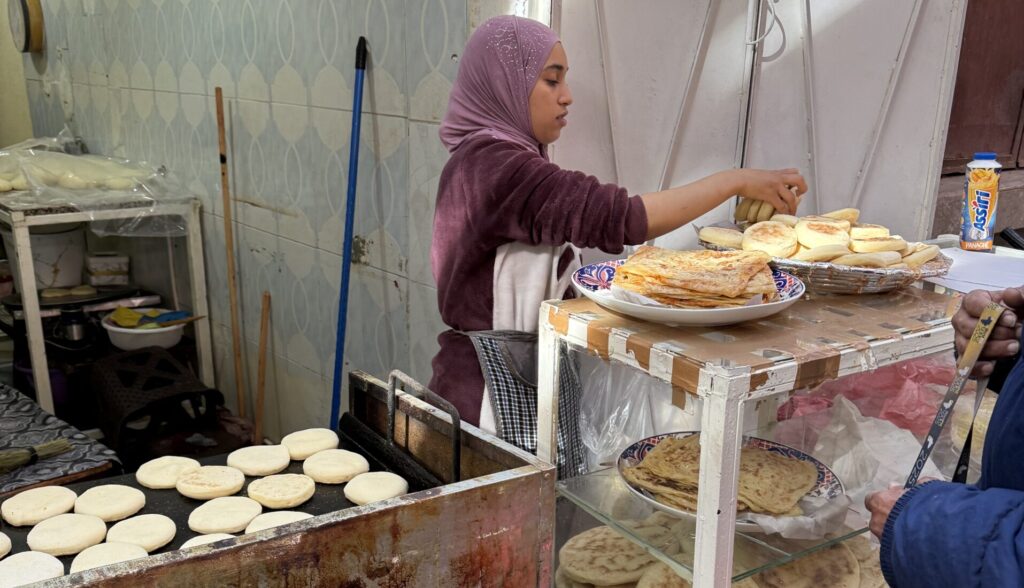
Bread is a dominant force in the world of Moroccan street food and my nose was following the yeasty smell to a new bread around every corner in the souks. When discussing traditional Moroccan breads, the topic of communal ovens is a fascinating part of the culture. Since many homes don’t have ovens, people can drop off their prepared breads and treats to be baked in the communal oven in exchange for a small fee (which can sometimes be paid in cookies). Below I’ve listed some of the best breads you’ll find throughout Moroccan street food stalls:
- Msemmen: A flaky square flatbread (My favorite bread I tried in Morocco)
- Harsha: Semolina bread, very similar to an English muffin
- Baghrir: Hole-filled, yeasted semolina pancakes with a spongy, almost stretchy texture. My guide in Tangier claimed that Moroccan mothers take great pride in their Baghrir and the more holes the better.
- Sfenj: Moroccan donuts tossed in sugar
Cookies
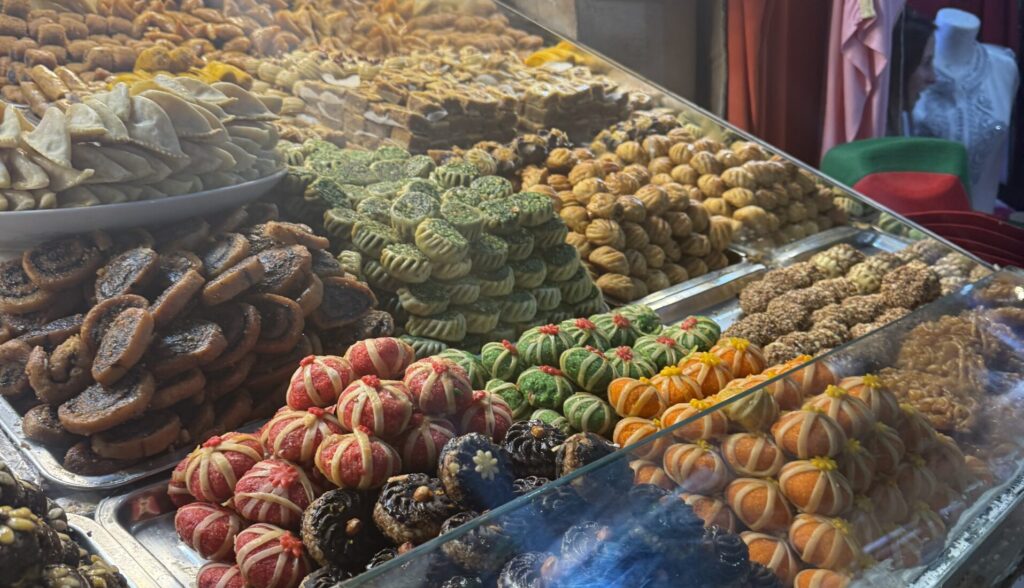
Stalls filled with a rainbow of sugary confections are sure to turn heads of any passersby. If you approach one, you’ll likely be bombarded with samples of the most popular treats, but I highly discourage accepting samples if you’re not planning on purchasing anything. Below I’ve listed some of the most popular cookies you’ll find in these stalls.
- Gazelle horns: Crecent shaped pastry filled with almond paste
- Chebakia: Sticky, honey-soaked sesame cookies often served during Ramadan
- Ghoriba bahla: Almond and sesame shortbread cookies
Fruits & Fresh Squeezed Juices
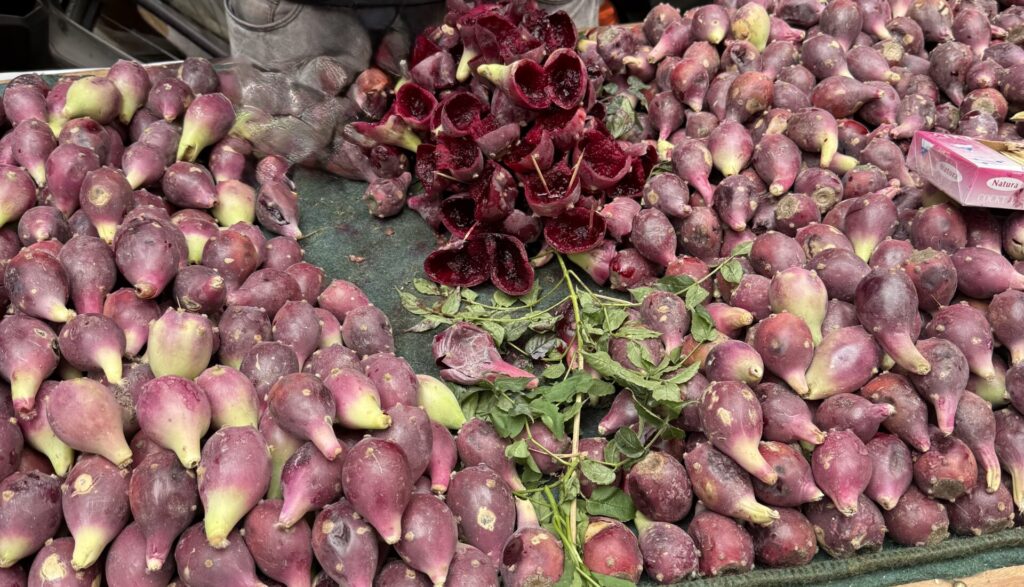
If you’re in need of a refreshment, stop at one of the stands overflowing with pomegranates or oranges for a fresh squeezed delight. Avoid the stands in The Big Square as these are often tourist traps which water down the juice and add sugar. You may also come across a table filled with vibrant magenta prickly pears, and I highly recommend making a stop. I understand that fresh fruit is sometimes avoided by travelers out of fear that it’ll be contaminated with the water. However, the skin of the prickly pears is so thick that it’s commonly deemed safe to eat.
Olives
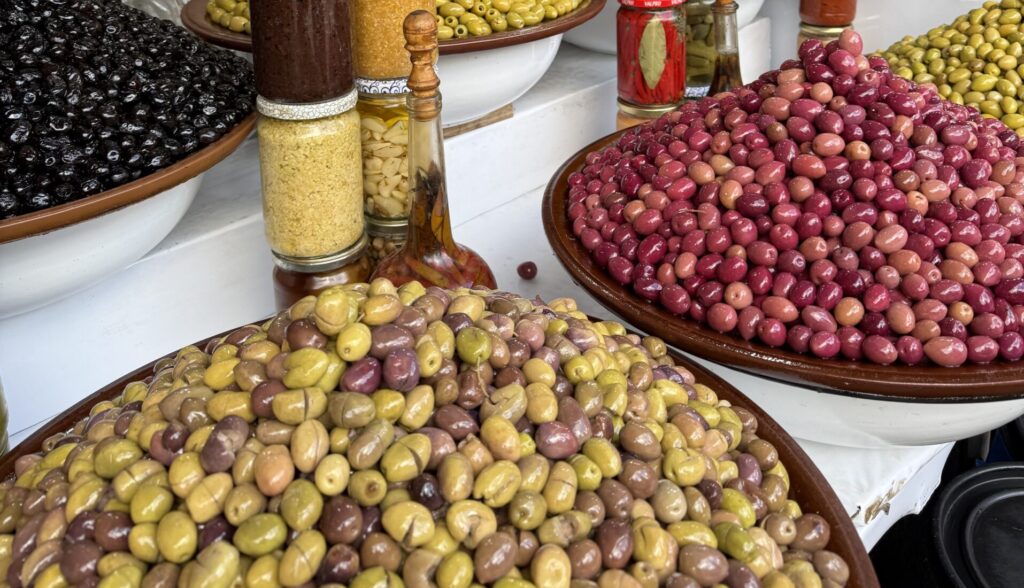
Towering bowls of olives and free samples are failproof strategies to trap any tourist, but fear not, these stalls are no trap. In the seemingly endless array of olives, you can find spicy harissa olives which are the real stars of the bunch in my opinion.
Dates
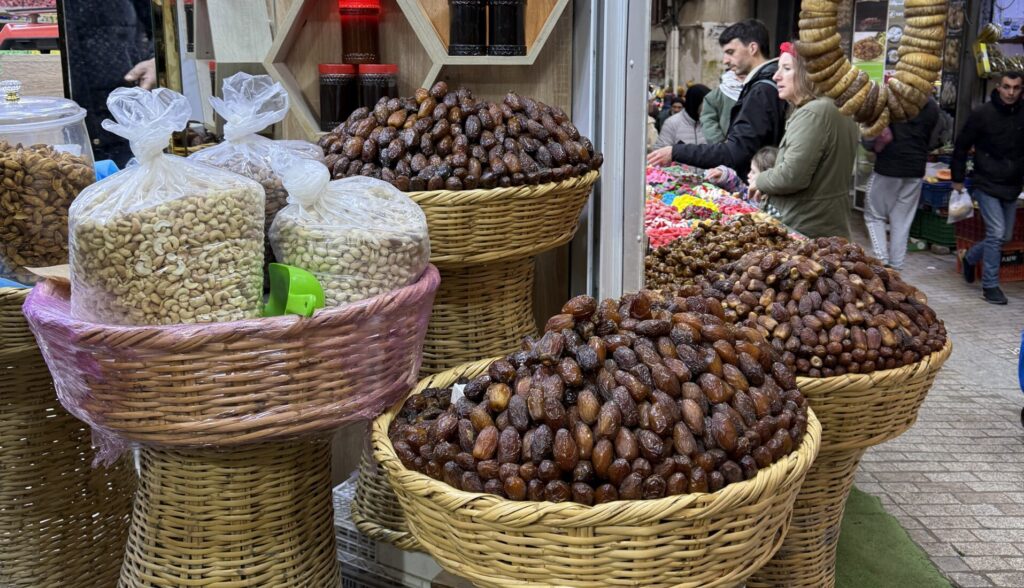
A caramelly medjool date stuffed with crunchy walnuts is one of the best bites you can have on the streets of Morocco. Dates are an integral part of Moroccan culture; from being a crucial pillar in their agricultural economy to the role they play in Muslim culture. As an avid date lover, I can say that the dates I ate in Morocco were without a doubt the best I’ve ever had.
Briwate/Briouat
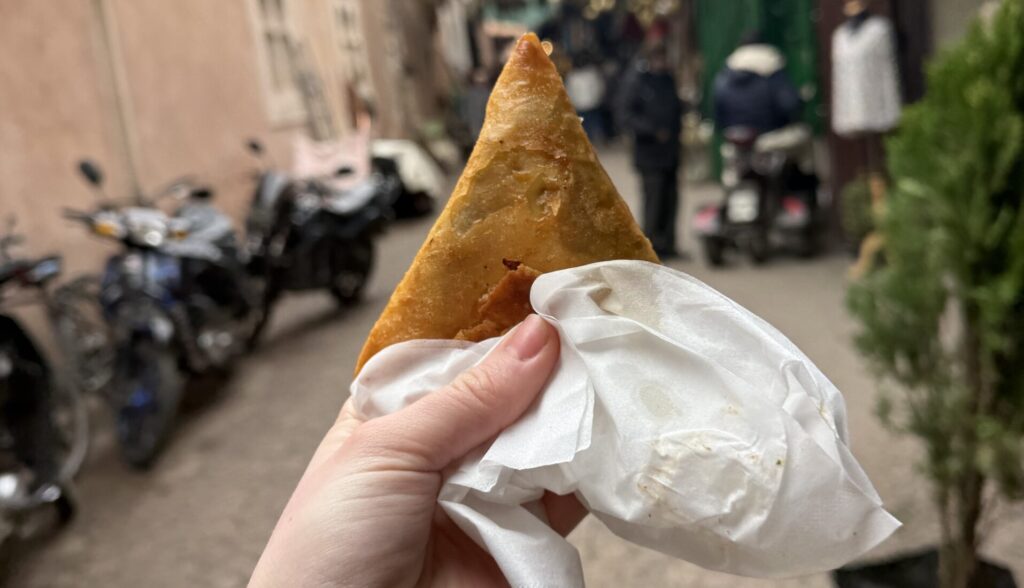
You’ll see this delicacy spelled in multitude of ways, one of the most popular alternatives to the one I used above being briouat. The spelling isn’t the only thing that varies for this pastry, the fillings are seemingly endless. Briwate can be sweet or salty, but the qualities that define them are the flaky fried pastry and triangular shape. Some of the most popular savory briwate are stuffed with cheese, chicken, or ground beef. The sweet briwate are often smaller and filled with almond or peanut paste, then dipped in a succulent honey syrup after frying. However you spell it or whatever filling you choose, you’re going to love it.
Couscous
Moroccan couscous is the smaller, fluffier, more delicate sibling to Israeli couscous. Whether it’s served with meat, vegetables, fresh herbs, toasted nuts, or any combination of these ingredients, it’s a staple in Moroccan cuisine.
Pastilla
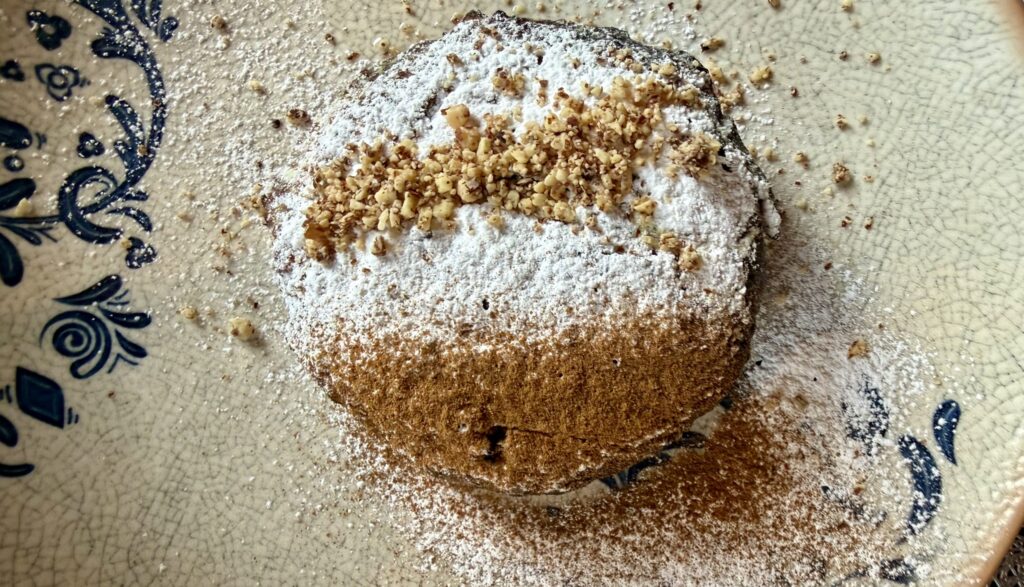
This dish may seem intimidating, but I assure you it’s surprisingly delicious. While traditionally made with pigeon, I found that it was most often filled with chicken or fish today. Warqa (a Moroccan pastry similar to phyllo) encases a sweet and savory filling made of almonds, eggs, and the protein of choice. The final essential touch: a sprinkle of powdered sugar and cinnamon on top. This special occasion dish is the middle ground between entrée and dessert you didn’t know you’d love.
Tagine
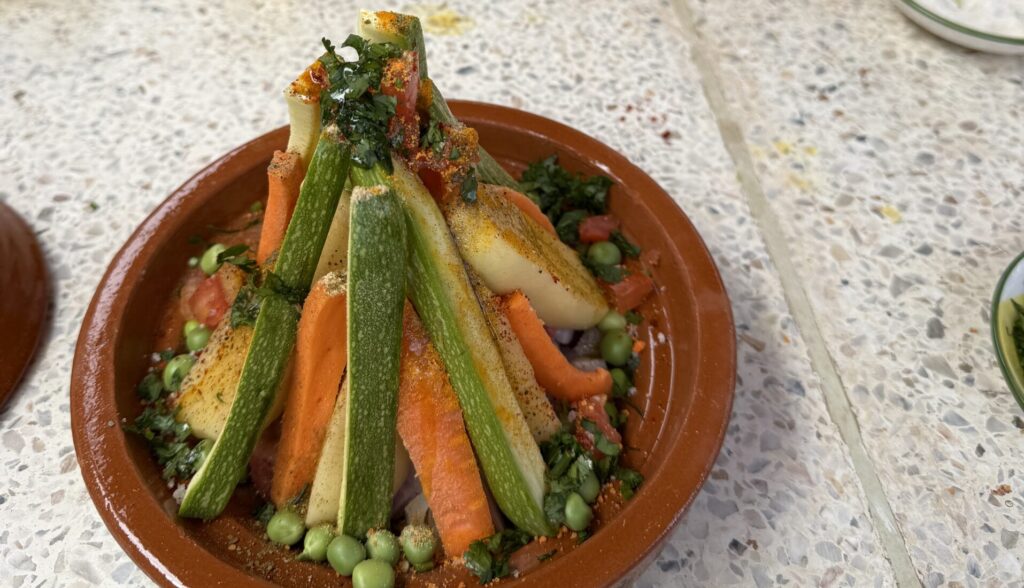
Tagine might just be the most critical food of Morocco and can be found at every turn. While the exact ingredients vary, the dish defining conical earthenware pot is filled with a protein, vegetables, and traditional Moroccan spices to create the iconic stew.
Harira
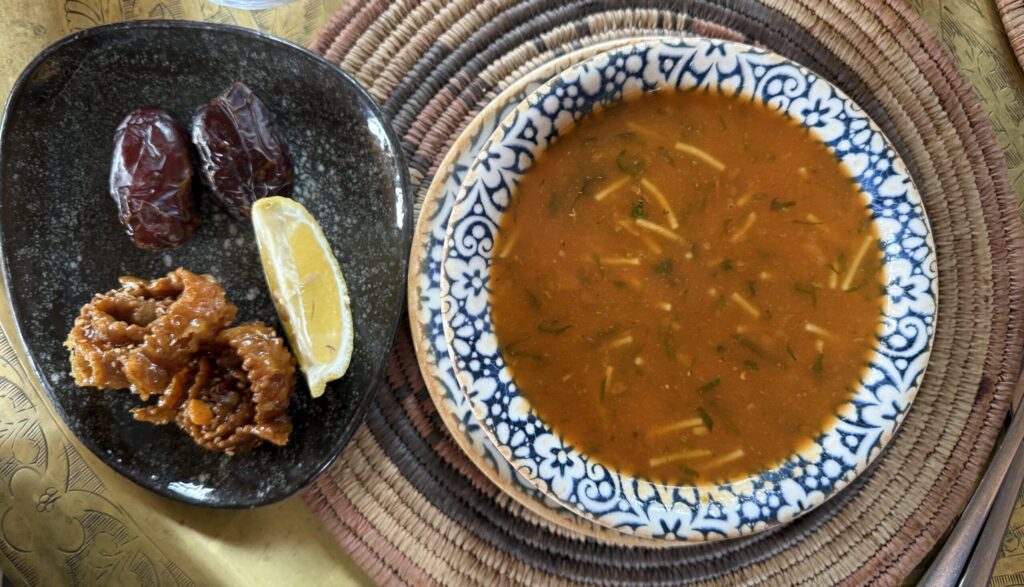
This creamy tomato-based soup is a Moroccan staple, frequently served during Ramadan. Chickpeas, lentils, and broken vermicelli noodles (sometimes replaced with rice) characterize the dish for what it is. My trip to Morocco happened to be during an uncharacteristically freezing and rainy time, so this soup was always a comforting choice.
Mint Tea
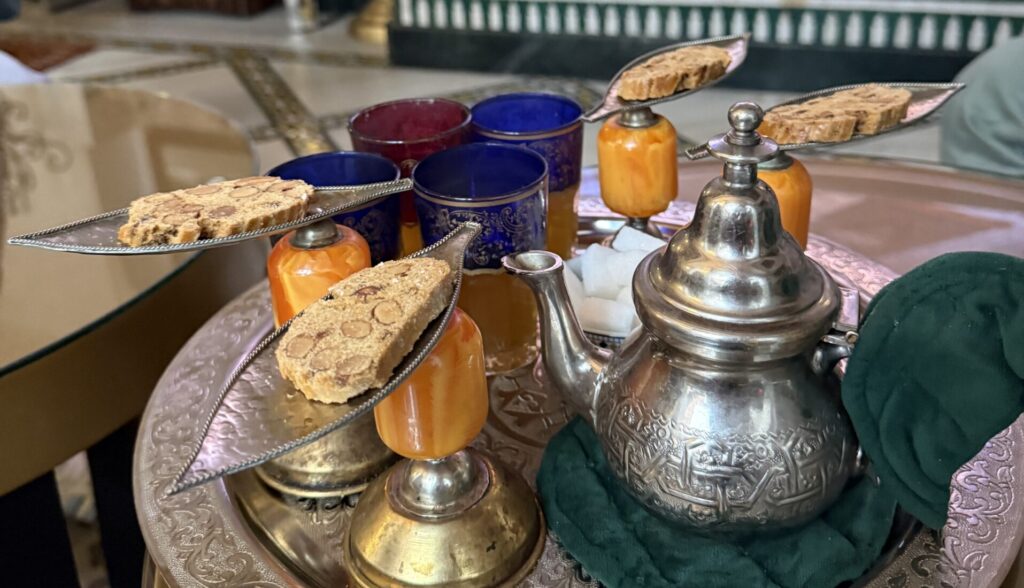
Mint tea is an integral part of Moroccan culture, and I assure you won’t have to search for it during your trip, it seems to find you at every corner. Poured from the delicate metal teapots, raised high above the cup to create foam and show respect to the guest, is an iconic combination of gunpowder green tea and spearmint leaves. You’ll be asked simply “sugar or no sugar”, and then left to savor.